Angular is a popular open-source web application framework led by the Angular Team at Google and by a community of individuals.
It provides a robust framework for building client-side applications, handling tasks like data binding, dependency injection, and routing.
Angular is written in TypeScript, a statically typed superset of JavaScript, which adds strong typing and other features to JavaScript, making it more maintainable and scalable for larger projects.
Angular is a popular choice for web application development because it offers a number of advantages, including:
Performance: Angular applications are typically very fast and responsive. This is because Angular uses a number of techniques to optimise performance, such as change detection and lazy loading.
Scalability: Angular applications are designed to be scalable. This means that Angular applications can be easily scaled up or down to meet the needs of growing businesses.
Security: Angular provides a number of built-in security features, such as DOM sanitisation and Cross-Site Scripting (XSS) protection.
Ease of use: Angular is a relatively easy framework to learn and use. This is because Angular provides a number of tools and features to help developers build and test Angular applications.
In addition to these general benefits, Angular also offers a number of features that are specifically designed for building complex and demanding applications. These features include:
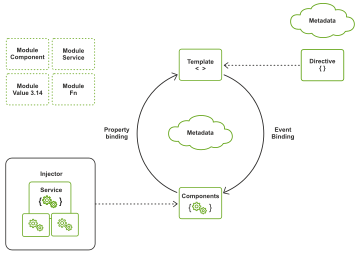
Component-based architecture: Angular applications are built using components, which are reusable pieces of code that encapsulate HTML, CSS, and JavaScript. Components make it easy to develop and maintain complex Angular applications.
Two-way data binding: Angular’s two-way data binding system automatically keeps the UI in sync with the underlying data model. This simplifies the development process and makes it easier to build dynamic applications.
Dependency injection: Angular’s dependency injection system makes it easy to write modular and reusable code. This helps to improve the overall quality and maintainability of Angular applications.
From a business perspective, investing in angular app development services enables organisations to build high-performing, scalable, and secure web applications tailored to their specific needs. It helps streamline operations, improve user experience, and accelerate digital transformation initiatives.
In addition to the technical benefits, Angular also offers a number of business benefits, including:
Faster development time: Angular’s features and tools can help developers build applications more quickly and efficiently, making it a practical choice for web teams and mobile app developers working on integrated or cross-platform solutions.
Reduced maintenance costs: Angular applications are well-structured and easy to maintain, which can help to reduce maintenance costs in the long run.
Improved scalability: Angular applications can be easily scaled up or down to meet the needs of growing businesses.
Enhanced user experience: Angular applications are typically fast, responsive, and user-friendly.
Overall, Angular is a powerful and flexible framework that offers a number of benefits for both businesses and developers.
It is a good choice for building a wide range of applications, from simple websites to complex enterprise applications.
Here are some examples of popular websites and applications that are built with Angular:
- YouTube
- Gmail
- Forbes
- Upwork
- Wix
Other Related Posts

Migration From a Monolithic Application to a Microservices Architecture